Tesla Cybercab deliveries to customers targeted for late 2026
Tesla executives confirmed that the two-seater robotaxi will begin reaching private buyers before the end of the year, though most units will initially serve the company's own fleet.
By Camila Rodriguez ·
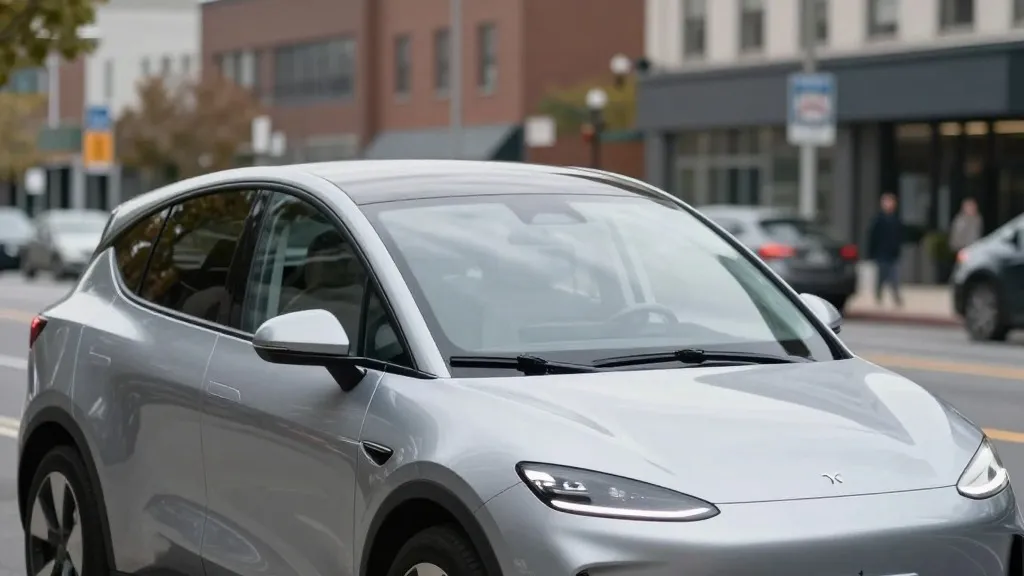
For residents in the Mid-Atlantic and other regions where Tesla operates, the wait for a specific purchase window for the Cybercab has officially ended. While the vehicle has been in production for several months, it was previously unclear when individual consumers could actually take possession of one. That ambiguity was resolved during Tesla’s third-quarter 2026 earnings call, where management provided a concrete timeline for when these purpose-built autonomous vehicles will move from the factory floor to private hands.
The company is now targeting the end of 2026 for the first customer deliveries. This timeline comes after months of speculation regarding whether the fully autonomous vehicle would be available in the near term or remain a fleet-only product for an extended period. The announcement suggests that the transition from internal testing to external sales is accelerating, although the scale of these initial sales is expected to be modest.
During the call held on October 21, Lars Moravy, Tesla’s Vice President of Engineering, stated that the company is aiming to get Cybercabs to customers by the end of this year. He clarified the current status of the production line at Gigafactory Texas, noting that while manufacturing is underway, every unit rolling off the line is currently being assigned to Tesla’s internal Robotaxi fleet. Moravy indicated that this internal use is a deliberate step to refine operations before opening the doors to private buyers.
As the operation scales, Moravy explained that Tesla will mainly deliver fully designed autonomous vehicles to its customers, with the Cybercab serving as the first of its kind. The company intends to start with small batches of deliveries to build experience in areas such as delivery logistics, ownership models, and fleet management. This phased approach allows the company to manage the complexities of operating autonomous vehicles outside of its direct control before expanding the customer base.
Elon Musk, Tesla’s CEO, reinforced the idea that private sales will be a secondary priority compared to fleet operations. He described the Cybercab primarily as a “transport-as-a-service” offering, distinguishing it from traditional personal ownership vehicles like the Model 3 or Model Y. Musk noted that the vast majority of Cybercabs will remain Tesla-owned, suggesting that the vehicle is designed more for shared mobility than for individual garages.
The Cybercab itself is a two-seater vehicle that lacks a steering wheel or pedals, relying entirely on Tesla’s Full Self-Driving software. Production of the vehicle began in February 2026, and early units were integrated into the Robotaxi service in early September when the company launched rides to the public. Tesla has previously indicated that the vehicle would be priced around $30,000, a figure that remains relevant as the company prepares for wider distribution.
Despite the clear timeline for customer deliveries, there are still technical and regulatory hurdles to clear. Ashok Elluswamy, Tesla’s Head of AI, indicated during the same call that unsupervised Full Self-Driving is expected to ship to consumer cars during the second quarter of 2027. This timeline suggests a gap between when Cybercabs reach customers and when the broader fleet of Tesla vehicles may support fully autonomous operation without a safety driver.
Early buyers or fleet operators may face geographically restricted autonomous operation due to the pace of regulatory agencies. This means that while the vehicle is ready for delivery, its ability to operate autonomously in certain areas may depend on local approvals. The upcoming months will test how quickly Tesla can navigate these regulatory landscapes while simultaneously scaling up production and customer support.
The stakes for the Mid-Atlantic region and other markets lie in how smoothly this transition from fleet to private ownership occurs. If Tesla can successfully manage the initial small-scale deliveries, it may open the door for broader adoption of the Cybercab as a viable option for both private users and service providers. However, the reliance on Tesla-owned fleets for the majority of units suggests that the private market will remain a niche segment for the time being.
Source: Teslarati